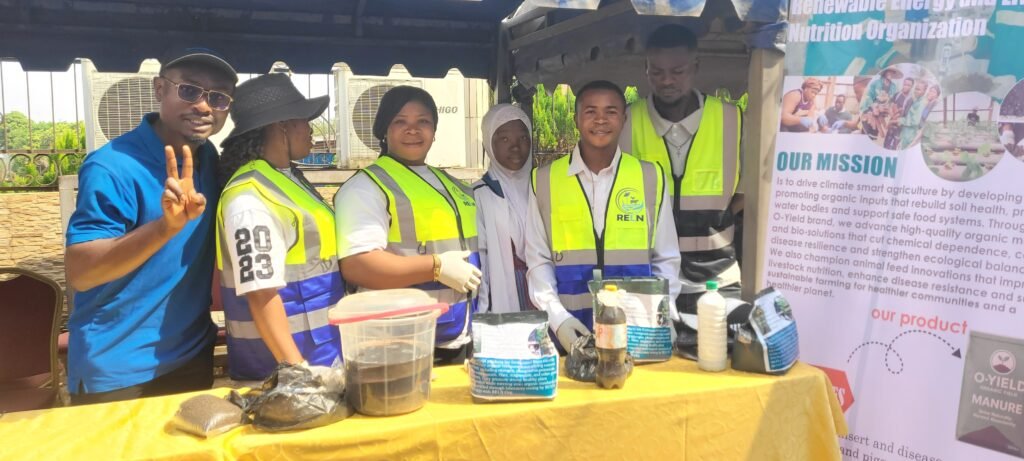
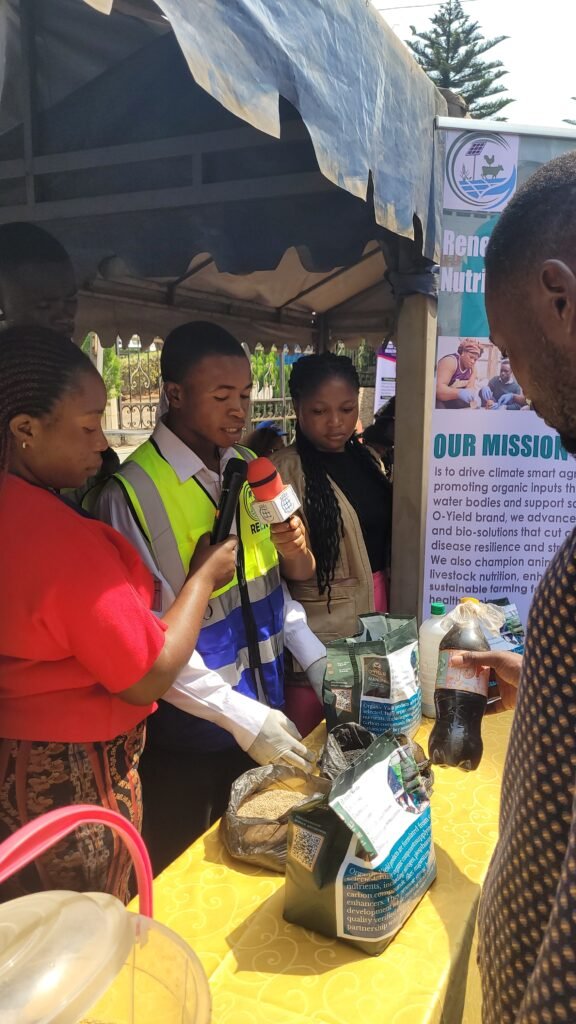
We begin with sincere gratitude to Global Health System Solution (GHSS) for selecting RELN under the Mini Grant of the 2026 Innovation Challenge in Bamenda. This opportunity was not only a recognition of our work, but a powerful encouragement to deepen our commitment to climate-smart agriculture. During the challenge, we proudly presented O-Yield, our flagship soil-regeneration product designed to restore degraded soils and strengthen farming resilience in the face of climate change.
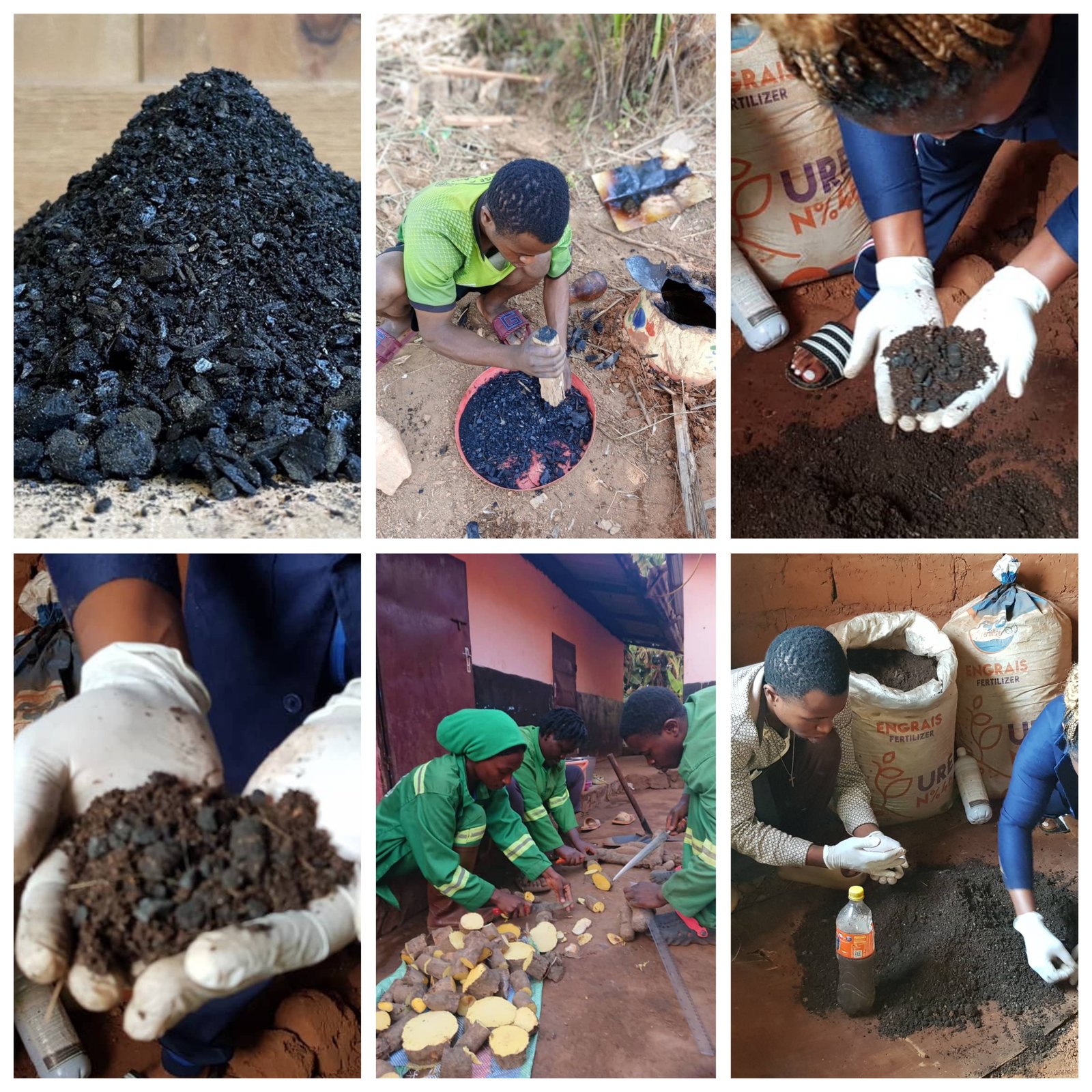
O-Yield is more than manure; it is a carefully engineered soil amendment developed through research, field testing, and local knowledge. Its core components include activated biochar, rabbit urine, Acacia alata leaves, Tithonia Diversifolia leaves, animal waste, and other nutrient-rich organic additives. Each component plays a critical role in rebuilding soil health, and their combined power creates a regenerative system that goes far beyond conventional fertilizers.
Activated biochar improves soil structure, increases water retention, and locks carbon into the soil for long periods directly contributing to climate change mitigation. Rabbit urine provides readily available nitrogen and beneficial microbes that stimulate plant growth. Acacia alata leaves add organic matter and support nitrogen cycling, while Tithonia leaves are rich in phosphorus and potassium, essential for root development and crop productivity. Animal waste contributes a broad spectrum of nutrients and enhances microbial life, helping soils recover their natural fertility.
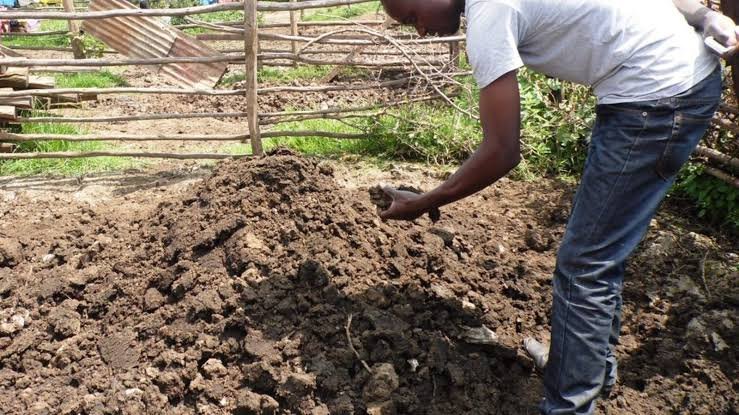
When combined, these components work synergistically to revive exhausted soils, improve nutrient availability, reduce dependence on chemical fertilizers, and increase crop yields sustainably. This approach is especially critical as climate change intensifies droughts, floods, and soil degradation across Cameroon and the wider region.
At RELN, soil regeneration is central to our climate-smart and sustainable agriculture initiative. Through farmer training, demonstrations, and community engagement, we promote practices that restore ecosystems while improving livelihoods. Our work addresses urgent challenges such as declining soil fertility, rising food insecurity, and youth disengagement from agriculture, offering practical and scalable solutions for a better farming future.
This initiative aligns strongly with the UN Sustainable Development Goals, particularly SDG 2 (Zero Hunger), SDG 13 (Climate Action), SDG 15 (Life on Land), and SDG 12 (Responsible Consumption and Production). It also complements national and international priorities on climate adaptation, sustainable land management, and green innovation, including those supported by the EU and development partners.
To scale our impact, RELN is actively seeking strategic partnerships, sponsorship, and mentorship. Support in infrastructure, technical guidance, research collaboration, and market access will enable us to expand O-Yield production, strengthen farmer outreach, and build long-term resilience within vulnerable communities.
By regenerating soils today, we are protecting food systems tomorrow. Together with our partners, RELN remains committed to cultivating a future where agriculture works in harmony with nature not against it.